
On this page
Write down who paid each bill
Create one shared ledger for the trip and invite the people involved. Use a single currency for this first example so the arithmetic is easy to follow. Alex and Sam both take part in every listed expense.
| Expense | Amount (USD) | Paid by |
|---|---|---|
| Hotel | 240 | Alex |
| Taxi | 26 | Alex |
| Dinner | 58 | Sam |
| Groceries | 32 | Sam |
| Museum | 44 | Alex |
| Coffee | 12 | Sam |
| Total | 412 | Alex: 310 Sam: 102 |
For each record, choose the actual payer and everyone sharing that purchase. Someone entering a bill on another person's behalf should still choose the person who paid it.
Each person owes half of USD 412
Alex paid 240 + 26 + 44 = USD 310. Sam paid 58 + 32 + 12 = USD 102. Those are the amounts they paid during the trip, before reimbursing each other.
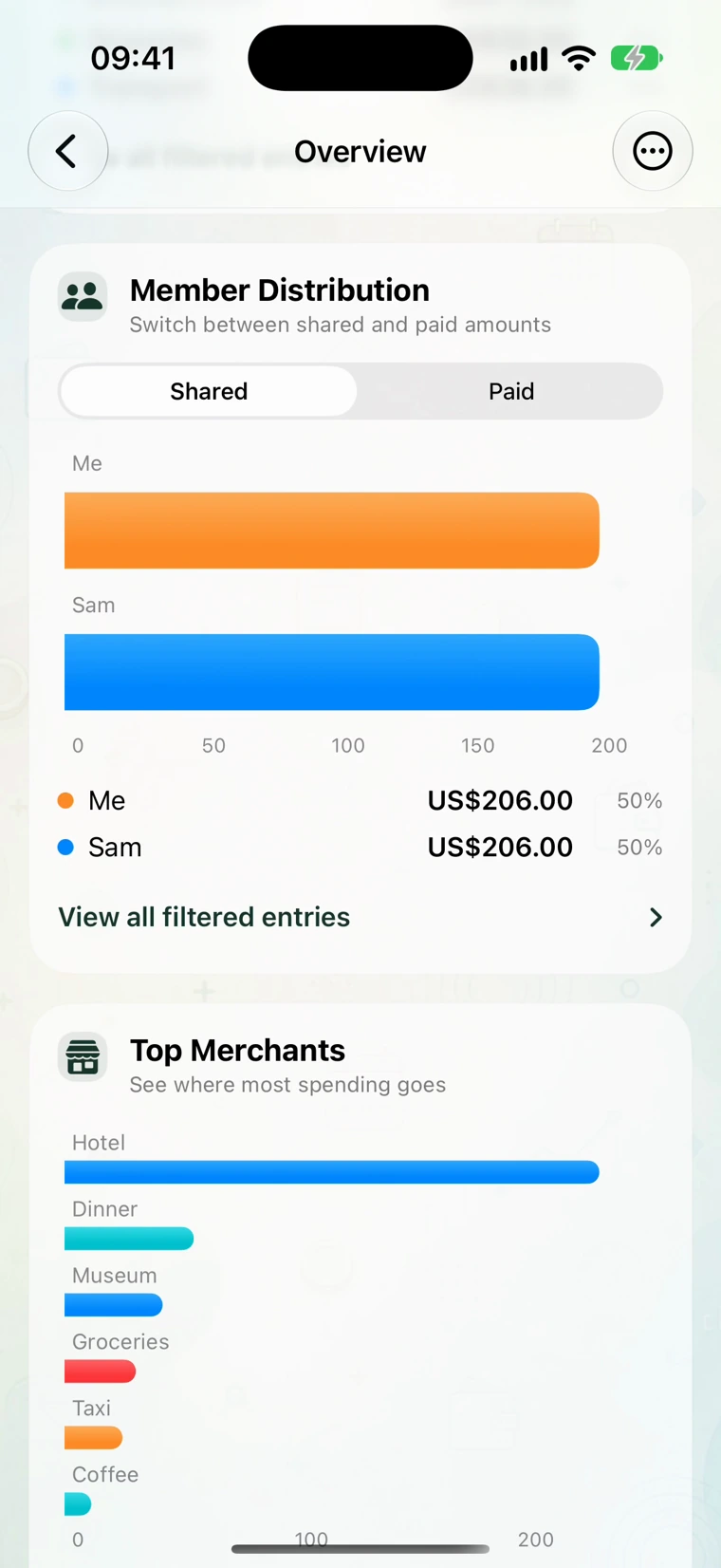
Their equal share is 412 ÷ 2 = USD 206 each. In Overview → Charts, the Member Distribution control lets you switch between Shared and Paid. The Shared view below shows USD 206 for each person.
Sam pays Alex USD 104
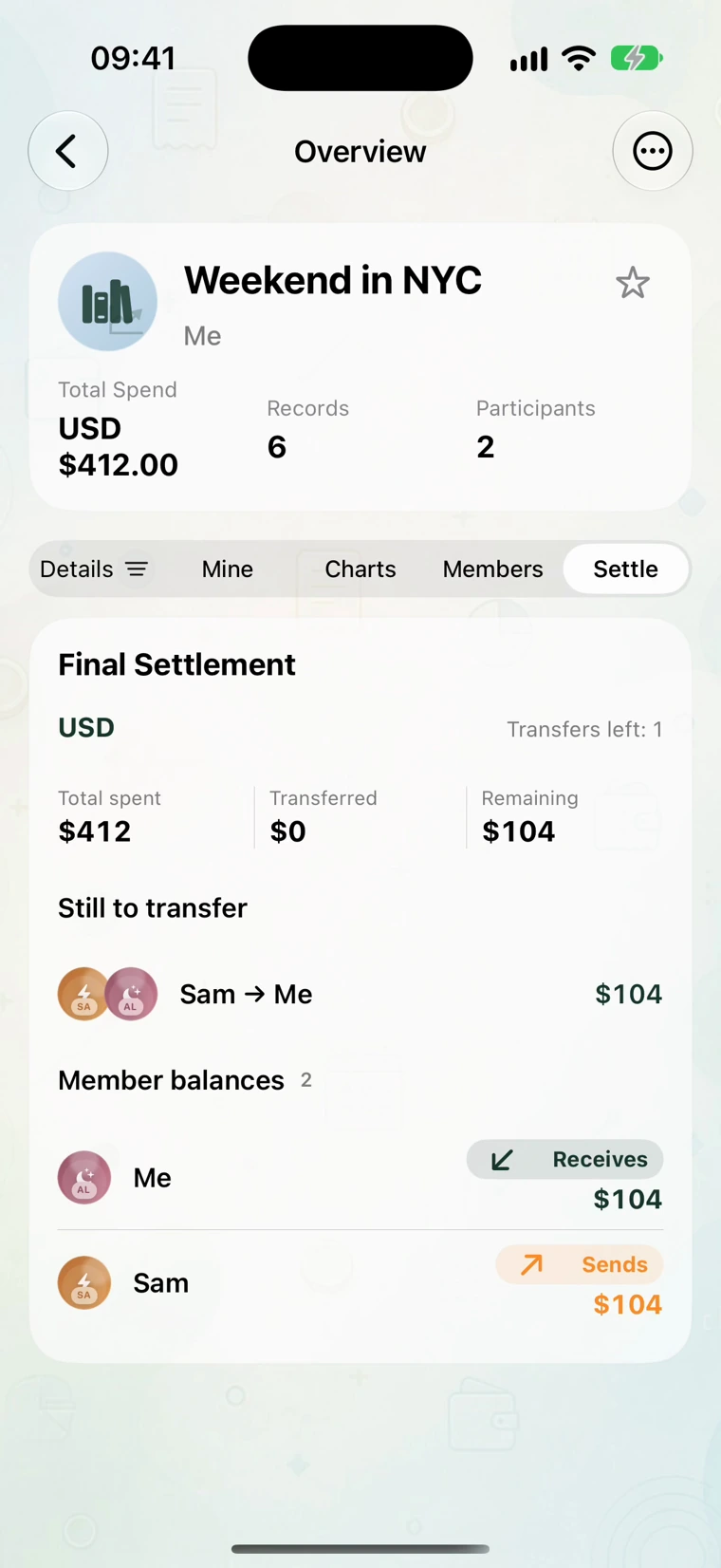
Alex paid 310 − 206 = USD 104 more than Alex's share. Sam paid 206 − 102 = USD 104 less. One payment from Sam to Alex balances the trip.
Sam → Alex: USD 104
Alex's final cost: 310 − 104 = 206.
Sam's final cost: 102 + 104 = 206.
Open Settle to see the suggestion. The screen says Sam → Me, $104, because Alex is using the iPhone.
After agreeing on the records, pay through a method you both choose. Record the completed repayment in the ledger if you want the remaining balance to reflect it. CoolMeow calculates balances and records repayments; it does not move the money.
When only some people share a purchase
A larger group does not mean every bill belongs to everyone. Suppose Alex, Sam and Jamie share a USD 240 room, but only Alex and Sam take a USD 30 taxi. For this three-person example, only the room is shared by everyone.
| Cost | Selected participants | Share per person |
|---|---|---|
| Room: USD 240 | Alex, Sam, Jamie | USD 80 each |
| Taxi: USD 30 | Alex, Sam | USD 15 each |
| Total share | Alex: 95; Sam: 95; Jamie: 80 | USD 270 in total |
If Alex paid both bills, Sam owes Alex USD 95 and Jamie owes Alex USD 80. Splitting the whole USD 270 three ways would charge Jamie for a taxi Jamie never took. Select participants per entry before relying on the final balances.
Follow a chart total back to its entries
In the two-person ledger, Dining is USD 70: dinner for USD 58 plus coffee for USD 12. The category panel offers View 2 entries, so you can check exactly what makes up that total.
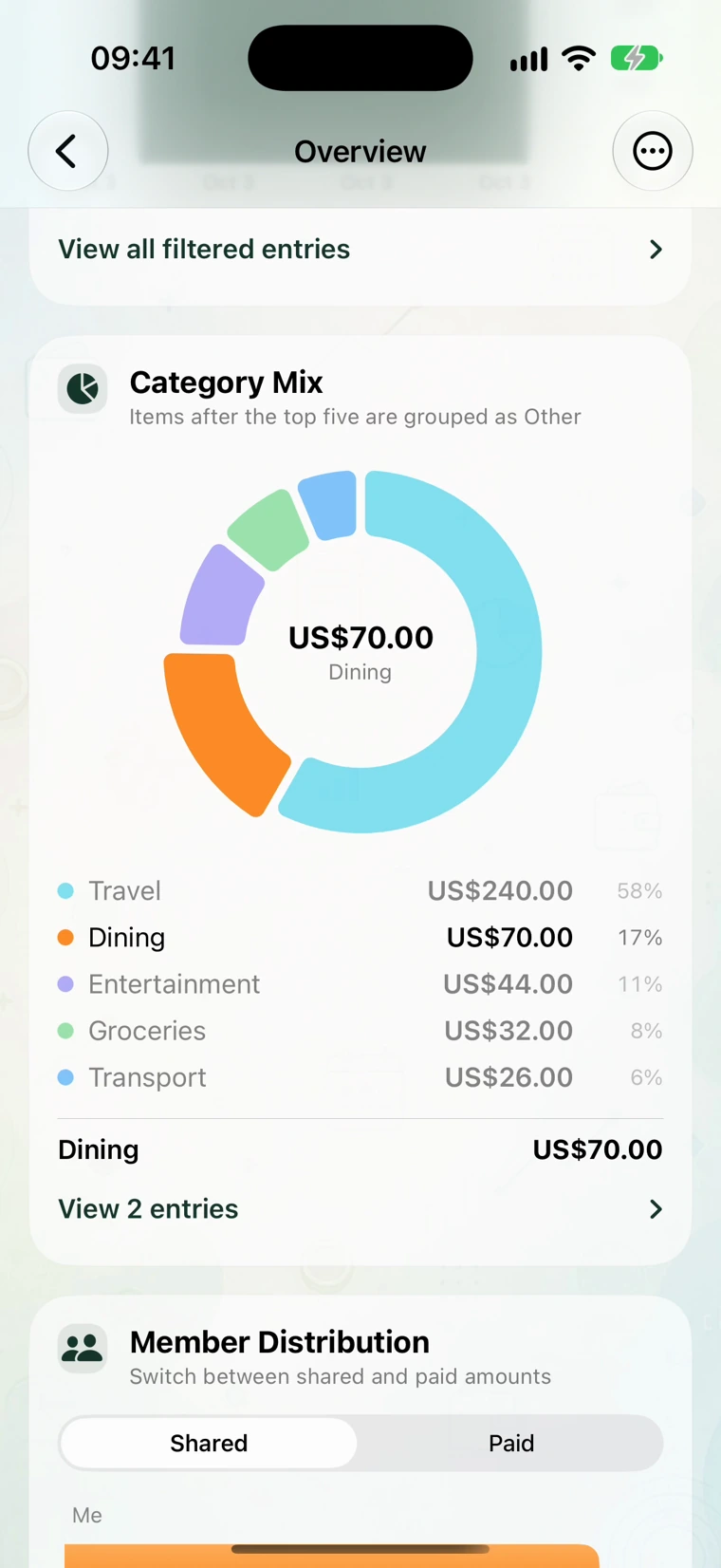
If a balance seems wrong, start with a missing or duplicated expense, the payer, and the selected participants. Also check the date range or filters in the view you are comparing. Correct the underlying record, then review the balance again.
If the trip uses more than one currency
The USD 412 example contains only dollar expenses. A trip with yen, euros or other currencies needs a conversion before you can add the amounts. Keep the original currency and review the conversion shown in the ledger. The multiple-currency example works through that separately.
Shared ledgers require a ledger creator with an active Basic subscription. Invited members can join without buying their own Basic subscription. You can keep personal income and expenses in a free personal book.
Watch the 46-second app recording
Actual iPhone and Android screens with sample data. Waiting time is edited out.